”We are far more than numbers or headlines”
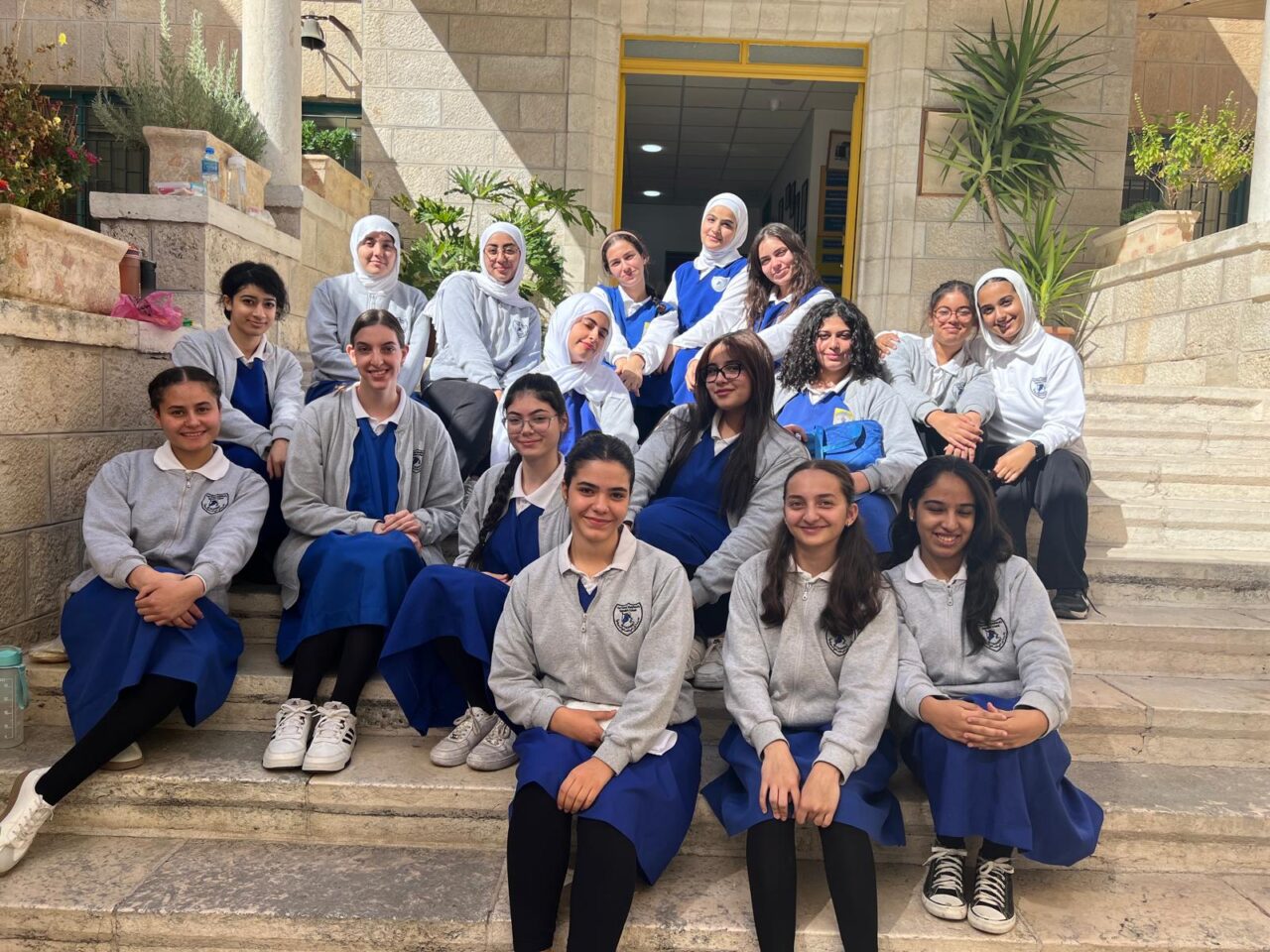
The 11th grade students at the Good Shepherd’s Swedish school in Bethlehem were asked to share their thoughts for the main column in the ”We are still here” issue (December 2025), and they decided to write as a collective ”I”. We are grateful for this opportunity to share their text with a wider audience.
I’m a Palestinian, and for a long time, I was envious of those living outside of Palestine. I often wondered how they seemed so carefree and happy while we were facing bombings, violations, and harassment. For many of us, life is a constant struggle against oppression. We grow up under occupation or in refugee camps, where accessing basic needs like clean water, electricity, education, and healthcare is a challenge. Our freedom is restricted, and daily life can be disrupted by checkpoints and the threat of violence.
Despite these hardships, we hold onto our identity, culture, and hope for freedom and peace. I used to give excuses to those I saw as ”free,” believing they understood our suffering. But as I grew older, I realized that their freedom was real and unfiltered. This realization was confusing; I had so many questions about right and wrong, about our treatment, and why the world seemed indifferent to our plight.
As a teenager with more access to information, I became determined to find answers. I dove into research about our history and the injustices we face. However, I found endless descriptions of our suffering but rarely any acknowledgment of the wrongdoers. I struggled to understand why the perpetrators weren’t held accountable. The laws I read about promised equality but felt empty in our context. It seemed like a cover-up.
The turning point came when we, as Palestinians, decided to stand up against our oppression. Suddenly, organizations claiming to help started to act, but it was clear they weren’t fighting for us. I realized that while people are said to be equal, some are treated as more equal than others. This disparity puzzled me, but I was determined to uncover the truth.
I decided to share our story on social media, hoping to raise awareness. Instead, my account was reported and deleted, reinforcing the feeling that the truth was being controlled. This manipulation made me feel powerless, as if my voice didn’t matter.
Now, as a Palestinian, I no longer envy those living outside our borders. I see that their lives aren’t as perfect as I once thought, and many are oblivious to the struggles we face. The world often sees us as mere numbers or headlines, but we are far more than that; we are vibrant lives with dreams and aspirations.
I love my country and wish to improve it one day. Education has become my form of resistance. Despite the challenges of studying under occupation—checkpoints, delays, and fear—I refuse to give up. Each day I go to school, I assert my right to learn and hope for a better future.
The occupation affects us not just physically but emotionally. It creates anxiety, sadness, and anger. It’s hard to dream about the future when the present feels so uncertain. Yet, every time I walk to school, I see life in our streets, reminding me of our resilience.
Education is vital for us; it keeps our spirits alive. My friends and teachers motivate me, helping me see that hard work will eventually pay off. While some may see our struggles as insignificant, their impact on our lives is profound.
I’m determined to keep pushing forward, driven by the hope that one day, our story will be heard and our struggles acknowledged.