
The End of Ecumenism?
A Conversation with Regina Elsner
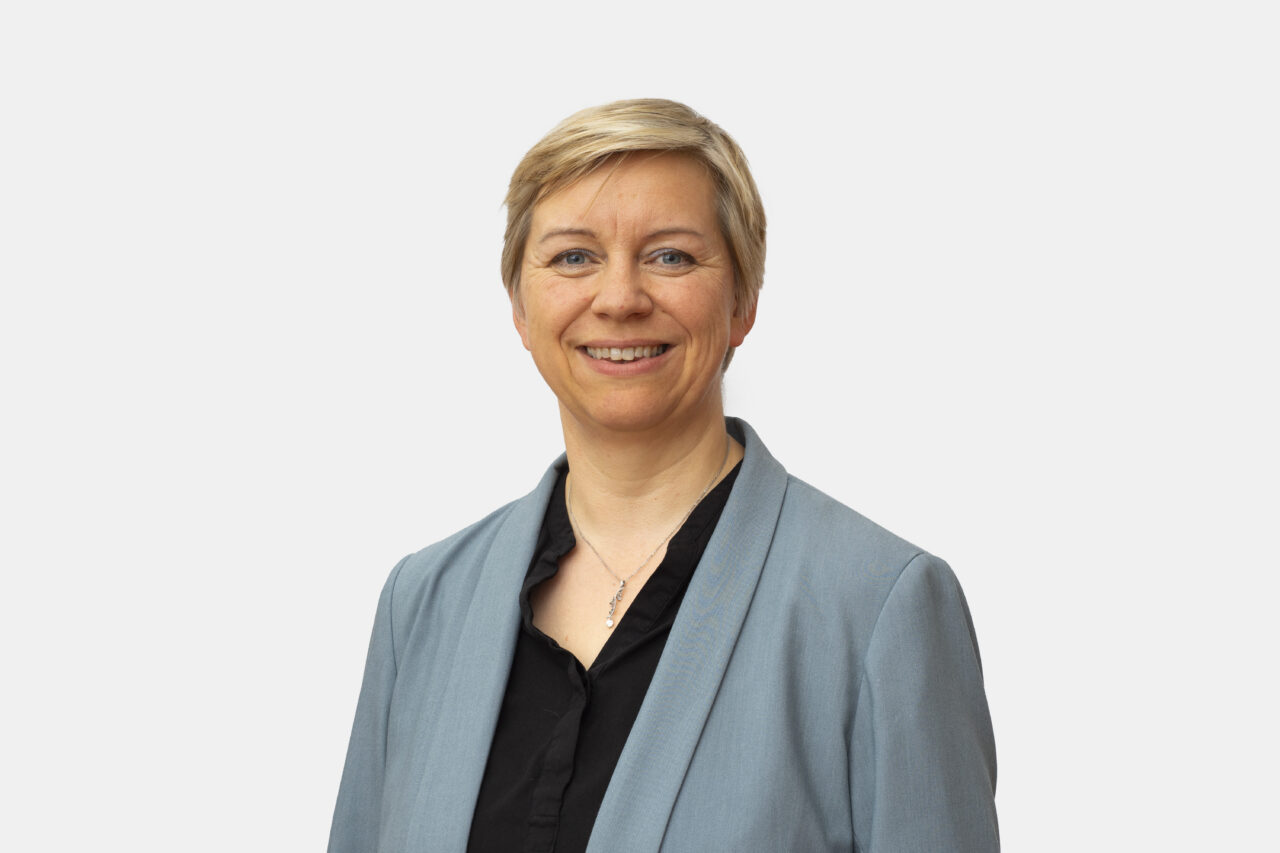
Regina Elsner, professor vid Universität Münster. Bild: Universität Münster
Russia’s attacks on Ukraine – in 2014 and then in 2022 as a full-scale invasion – sent shockwaves through the world, also through the ecumenical world. You have studied ecumenism and Eastern churches for more than a decade. How would you describe the current situation?
I would add that in the beginning the Russian attacks on Ukraine were hardly noticed by ecumenical organizations, which is in itself an indication of the complicated situation. The attack in 2022 was indeed a shock for all Christian churches, at least in Europe. This is due to the sheer fact of a large-scale military war of aggression in the middle of Europe, which had been unimaginable until now. The brutality of the war – which we learned about after the withdrawal of Russian troops from cities such as Bucha and Irpin, or through the reports from Mariupol which remains occupied to this day – deeply shocked the churches. However, the shock is also due to the justification of the war by the leadership of the Russian Orthodox Church, which had been a valued member of various ecumenical structures. The Church’s participation in propaganda that legitimizes the war, including its merciless treatment of opponents of the war within its own ranks, could not be discussed with the Moscow Patriarchate in any way; all calls and conversations were ignored by the Russian side – or even exploited. All ecumenical structures failed. This helplessness paralyzed ecumenism for a while.
Today, I would say that ecumenical relations have returned to “business as usual”, the war is a fact, like other wars in the world. In the year of Nicaea 2025, this war made no headlines. Ecumenical discussions on dogmatic issues continue, even though the Orthodox churches are deeply divided. What is less noticed by the mainstream press is that small ecumenical grassroots encounters have continued. Yet, unfortunately, the ideological issues that also fuel the war remain unaddressed.
One concept you have coined to make sense of the current situation, drawing on the work of Belarussian philosopher Tatiana Shchyttsova, is “Ökumene der Erschütterten”, which could be rendered as “ecumenism of the shaken” or “ecumenism of the shocked” in English. What is this ecumenism about?
I am convinced that we must find a new ecumenical paradigm, one that moves away from the consensus method with its focus on church leadership. Both aspects have slowed down the ecumenical movement for decades, obscuring the prophetic character of Christianity that marked the very beginning of the ecumenical movement. The “ecumenism of the shaken” is based on the idea of solidarity according to philosophers Jan Patočka and, more recently, Tatiana Shchyttsova. It is about a solidarity that arises from the shared ability to let oneself be questioned in one’s own Christian identity by this incomprehensible war.
Such an ecumenism almost automatically seeks out the marginalized. For example, it makes room for dissident Orthodox believers from Russia and Belarus, conscientious objectors from Ukraine, or military chaplains from the front lines. In a way, such an ecumenism would be a return to the original impulse of the meeting in Stockholm in 1925. It is unacceptable that we, as churches, consider a difference in ritual or hierarchical protocol among bishops to be more important than the plight of people in war.
The Chair of Eastern Church Studies and Ecumenical Theology that you hold at the University of Münster in Germany is known for its combination of ecumenism with peace studies. In the current context of on-going armament or rearmament across Europe, this combination is striking. Some might say it is out-dated. What can ecumenists learn from peace studies now?
Peace and conflict studies offer many tools for understanding and changing the power structures prevalent in ecumenical relations. Peter Lengsfeld, Heinz-Günther Stobbe, and Maria Wernsmann have conducted research on this topic in Münster – I consider their findings to be noteworthy until today. Two aspects that have become important to me are a more comprehensive understanding of security, which overlaps with the ecumenical discussion on confessional identities, and the question of gender as a category of justice that changes the way we view conflict and conflict transformation.
If one looks at the attacks on gender studies at universities in European and American contexts, it is striking how “gender” has been turned into a shorthand for all sorts of issues that the political right and the political far right – if that is still a meaningful difference at all – pushes against. And, of course, gender is also a significant aspect in warfare, including war crimes. What connections does gender have with what you call “a more comprehensive concept of security”?
In the German context, I think it still makes sense to distinguish between the right and the far right, if far right points to extremism. I recently learned that, especially in East Germany, “right” is used in contrast to “left”, meaning the communist left. Many people feel unfairly suspected when everything conservative is categorized as “radical right”, and tend to leave the democratic discourse in response to such suspicions. But, yes, the boundaries are becoming more and more fluid. Resistance to so-called wokeness, which is often associated with the concept of gender, is a common denominator that connects many movements. And it radicalizes them. For many, gender has become a key concept in the destruction of the old order. Resistance signals a sense of threat, which can be easily manipulated.
Of course, it is absurd to perceive gender as a greater threat than, say, Russian cyberattacks. But this perception shows the importance of identity, which is being questioned more strongly by the gender debate than by cyberattacks. If we succeed in raising awareness of gender as a category of justice again, our democracies will be strengthened. In turn, we will become more resilient to the real threats. Security is not just about military defense; it is also about so-called ontological security, the security of being allowed to be myself. The governments that declare gender to be an ideology – such as Russia, but also the Vatican – try to create security for some at the expense of the security of others, and that in the same society. This provokes violence instead of preventing it.
Is there still any ethical or political traction to the idea that collaboration between churches rests on a shared faith, the Christian faith shared by all Christian churches?
The problem is that ecumenical dialogues have turned from a shared search for Christ in this world to a new confessional identity politics. The construction of identity through demarcations between insiders and outsiders seems to be more important than shared faith. In my observation, this is also linked to the general decline in the relevance of churches in the Global North, which have had a significant influence on ecumenism. In this climate of general uncertainty, it seems more effective to draw clear boundaries than to remain radically open to others and to otherness. I am always encouraged when Christians act together against injustice without making grand ecumenical statements, for example in the resistance against state violence in Belarus, or in church asylum or sea rescue of refugees in Germany, or in the resistance against immigration enforcement in the USA. None of this is about dogma, but about a dignified life, about finding the image of God in the oppressed. This could be the common foundation for churches.
The ecumenism that you both examine and envision here revolves around cases and controversies that have to do with intra- as well as inter-religious relations. Do you see this ecumenism as a sign for the necessity of co-operation across religions as well? As in the “ecumenism of the shaken”, a type of co-operation that looks for commonalities and coalitions beyond the doctrinal definitions of hierarchies?
Absolutely. Indeed, within one faith community the common foundation for ethical action is easier to assess, so there is a difference between intra- and inter-religious work. One’s concept of humanity, one’s ideas about the meaning of life, and one’s hopes for the future can be communicated in a shared language, so that questions of right and wrong have clearer criteria. But the challenges facing humanity are too great and the world too interconnected for us to afford to isolate ourselves from other religions. Ultimately, many interfaith collaborations are based precisely on this shared shock at the vulnerability of human life, for example when I think of the Global Ethic Project or Religions for Peace. However, in view of the experience with Christian “ecumenism of hatred”, – interdenominational networks that have found their greatest commonality in their hostility toward the liberal order – I would also say that joint action and joint theology must remain interrelated. This has long been underestimated in the ecumenical movement, with the result that, for example, the Russian Orthodox Church can now very cleverly claim that its worldview is actually ecumenical consensus.
In the current political, cultural, and ecclesial situation, it is difficult to imagine an end to the Russian attacks. Can you? What role can ecumenical collaboration play in pushing our imagination to concrete steps towards a just peace?
To be honest: no, I don’t see an end to the Russian attacks, at least a good end. I don’t see any interest on the Russian side in ending the war – quite the contrary. In my view, ecumenical engagement can hardly play a decisive role in questions of security policy and military strategy. But it can contribute a great deal towards breaking the logics of war which would prepare for a just peace: churches can combat enemy stereotyping, create spaces for encounter, and they can give a voice to people who would otherwise not be heard. There are initiatives. Often, they don’t make headlines, but precisely because of this, they are safe spaces for those involved.
And it is a special responsibility of the churches to disarm the ideology of war that is charged with Christian themes and tropes, the narrative of the necessity of a defence against liberal values that are seen as anti-Christian. This ideology of war shapes not only actions in Russia, but also in many other places around the world. Theologically, there are no good reasons for Christianity to oppose a liberal social order so strongly. Russia’s war and Catholic integralism in the USA, to name but two examples, show us how great the potential for violence is. If the Christian churches could come to a common understanding on this issue, it would greatly benefit the idea of a just peace.